


- Forbidden City - Episode 1 (1:05:39)
- Theory for Turntables -
The Quietest Moment of the Softest Rock (1:19:03) - Dreadful Thoughts - Frankenstein Book Club Parts 1 (1:12:47), 2 (1:03:59), 3 (59.31)
- The Nerdist - Paul McCartney (1:24:51)
I waited impatiently for the Grimm panel since last Thursday and as of yesterday at 5 pm, I finally had the pleasure of seeing that beautiful post-pregnancy glow on considering my own fearful opinions. Sure, the questions asked were cute and expected with the giddiness of the impending Loch Ness Monster storyline, the lack of Juliette and Kelly, and of course the "Spoilers" teasing game of it all. In other words, the off season responses a fan would expect.

The truth is, with the ever growing phenomenon of Comic Con and the genre of fantasy/sci fi lovingly logistics about Grimm or how magical and immersive SWM is as an actor and that's fine, but these are the questions I would have asked (in an imaginary world where I have the ability of confidence-ing
"I would like to ask a question considering the friendship of Nick and Monroe. In season 1 and 2 there was this fairly solid sense of masculine closeness, but now that there is basically this Grimm army, when, how, and will you [creators David Greenwalt and Jim Kouf, director/producer Norberto Barba] come back to that focus between the two characters?"

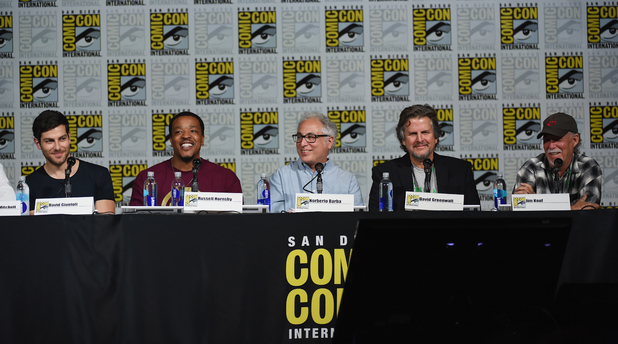
"Are there any early editing choices you [Greenwalt/Kouf/Barba] made to the show that you regret now? And if there are, would you want to rework them back into the show somehow?"
"Where do you [Greenwalt/Kouf/Barba/Coffee/Turner] think Grimm stands on the Bechdel scale? Do you think changing Juliette into a hexenbiest and the whole "hexenbitch " phenomena made where you are on the scale better or worse?"
"To Silas, I was wondering if in all of your magical Germanic-ness if you have more ideas of what you would want to bring to the show in terms of content and if they had not made it into Season 5, would you care to divulge future possibilities?"
"To Bree and Claire, as women where do you think Grimm ranks in terms of feminism both within the show and even in the broader genre of fantasy/sci fi ? Do you think it could be better and how, either in terms of the writing or characters in general?
"David [Giuntoli], I thought you portrayed the duality between Grimm and cop brilliantly in the last few seasons just in terms of that pressure cooking acting. Now that it is no secret (and this also goes to the producers), what other aspects of the character will be his internal war now outside of all of the loss and bitterness or will that be the only highlights of who Nick is as a character? Where does his darkness go from here? Will things get psychologically worse before it gets better, if at all?"
"Not to throw out episode ideas which I'm sure you [Kouf/Greenwalt/Barba] hear plenty of, but what do you think about a first-Wesen account (as it were) of experiencing the Grimm-ness in Nick's eyes? Or do you think it's frightening alone just from hearing it from other characters or even just to divulge the unseen just once?
"Claire, now that Adalind is insistent on being a better mother to Baby-Grimm now that Diana is gone, do you think she will lose her autonomy as a woman losing herself into the role of a mother? Now that Adalind has been weakened throughout the show in more ways than one, do you think she will jump back into some aspect of her old self at some point? What would you like to see paralleled or differentiated from her experiences as a daughter to an emotionally abusive mother to her own role as a mother? Do you think she can or will rise above her [mother-daughter issue] genetics?"
"Sasha [Roiz], producers, speculate with me. I know that you said that the royal storyline will be put aside for a bit, but now that the King is dead, do you think Mia Gaudot will be back to make a power play? Will we also see just a tiny ounce of Sean's backstory, just a teeny bit?"
"Russell [Hornsby], you seriously crushed it in that tent scene during the "Mishipeshu" episode, is there more impending scenery chewing to expect from you in the next season? What would you like to have happen to Hank outside of being a friend/extension of Nick?"
BONUS! My new favorite person and one of the many in the current running to be my spirit animal, Yael Tygiel interviewed cast and crew for my favorite podcast, Afterbuzz TV. Check out this magic -ness. (Click on the playlist button for the others)


Last time I caught up with the voguegasm bromance
Nick and/or His Grimm Army

Once upon a time, an average yet intuitive cop realized he was victim to his genetics of being a paranormal profiler blutbad fuchsbau hexenbiest compromising
There's nothing wrong with making a one person narrative into an ensemble as long as the focus on your main character never wavers. Maybe therein has laid the problem for the Grimm writers. How can you develop dimensional characters when you only have 40 minutes and known to be the pit stop hour where commercials come to die? For season 4, the issue has been the following. What can we stretch and what do we have to put a roadblock on? [More on this question later]
In Season 4, Wu joins "the Scooby gang," as it were, in a fantastic realistic way and by the season finale, he leaves the badge at home truly earning his Scooby stripes. Hank deals with a Native American Mishipeshu spirit in one of the better episodes of this season. Even Adalind didn't make me cringe so much as the show incorporated her real life pregnancy, which tied into her own Mommy issues. I love how these characters have been stretched a little further. But the focus occasionally hiccups for Nick, who did lose his Grimm-yness fantastical Luckily the

After Christmas break and the panic attacks that involved the Wesenrein, it was all Nick being a cop in the Wesen world which was a nice change of pace but without Trubel. Through the assorted cases, bringing back ex-Lieutenant Peter Orson to a natural MPD-suffering Wesen called the Huntha ing him camp
But let me back up since I kind of hit and ran on something back there. Let's go through the emotional teeter-totters of Nick's psychology in the past 3 seasons. Season 1 was the discovery and the slow evolution of balance between being a Grimm and a cop. Season 2 was how much of it would consume Nick and his home life as well as the balance of who he can trust with this knowledge. Season 3 was Nick's realization with amplified Grimm senses that he can be dangerous without a badge as well as the balance with the amplified senses. Where's the question of balance in season 4 exactly or are there more interesting questions to ask? Maybe instead of balance, Nick begins to unconsciously realize the dualities of everything: intentionally being dangerous leaving the badge at home, having to sleep with a shadow of his enemy in order to get his powers back, who Juliette is to him with or without the Hexenbiest powers, who Adalind is to him now that she's having his child?
But is duality an impossible abstraction to put into a TV show when it has been about disciplined balance? Or is that the risk the writers are taking right now in taking a chance on doing something different? But with doing something different also risks the show as a whole e.g. Glee. But at the same time, if Nick's psychology isn't so much a character, but instead duality, there is a sense that after those five episodes of just being resourceful that things have become dire as if there is no teeter totter anymore, it's simply polar opposites. In that case, then the show should feel a little off as both Kelly and Juliette's possible "deaths" will take Nick to that place I mentioned in my last post: should we feel sorry for that genetic rabbit hole of a Grimm or celebrate it because this is the old school Grimm that he could possibly come back from in season 6?
hexenbiest .
This is one part of the huge mess of what people have called "hexenbitch " that has been rather poetic. What would happen if someone was created Wesen instead of being born with it, what would be the differences? What would be the struggle? Balance? Duality? Perhaps it is because Juliette has never been a consistent character to begin with, it works as long as they keep it tight and disciplined in about 2 or 3 episodes. But, like The Grimm Podcast has said, this (and the Renard/Jack the Ripper storyline) could have been nailed in 3 episodes or less! Once again, it's all about those editing choices! Instead, it was stretched out to sixteen episodes right up to the possible "mercy killing."
Juliette only continued down this spiral of what it means to be Wesen and the balance of it throughout the rest of the season, it shifted from beating a deadnuckelavee (yep, went there...) into these really interesting moments. In the season finale, you can see her struggling between her human and Wesen side much like how Renard's mind was not completely his own. But she continues to do the evil thing because she does not know any better!

The issue I have ties Adalind into all of this from the moment Juliette tells Nick that she "will kill her." Since the start of the show, Grimm has kind of been a boy's club but with some sensitivity thanks to the guy love Monroe-style. Juliette was treated as something Nick struggled to keep separate from his Grimm and work life, someone who could see into the private places of himself, including the loss of Marie and the type of person he is having lost his parent(s) at an early age. Only through Adalind's continuing antagonism on Nick then Juliette, Juliette begins to hate her almost as much as Nick does.
But it's the relationship between Nick and Juliette that has always concerned me. Because she was always the home life that was to never get in the way of Nick's profession, Juliette was never even given any characterizing agency until she is turned into a Hexenbiest. Sure, before the transformation she had her moments of extreme passion defending herfuchsbau best friend when the abusive boyfriend broke into the house, learning how to use a gun and fighting off the Siegbarste with nothing but boiling water! But it's through her passionate nature that also destroys her through internalizing the damaged person who Nick naturally is.
Regardless, it's a woman internalizing a man and with Adalind destroying that man and by extension Juliette, it's understandable why the Burkhardt unit would collectively hate her. But it's the first glance of it that has always made me queasy and one of the oldest soap opera rules known to mankind. The blond-haired woman is the good girl and the antagonist is either a redhead or a brunette fighting over a man. Grimm somehow managed to invert that to their advantage. With all the emotional ammunition, yes, it's more than fair that Juliette on the Wesen flip side would be amplified for herhate ,

Where Juliette has become the antagonist, Adalind has fully settled into her role as the mother of (eventually) two children. I liked what they did to Adalind in the fourth season because of her stance as an antagonist and paying for it through the loss of her child. Whereas the last section of this post was about balance, it seems for the women their characterizing points are opposites. What was once the protagonist is now the antagonist and the antagonist's empathy would cure Juliette. What was once Adalind's biggest fear of having children and being a mother is now what she wants and realizing how ferocious she can be if she can't have them. After the scene she talked to her mother's grave in "You Don't Know Jack," however humorous, I got a sense that as someone of emotional abuse, it came full circle. There is something implied here that Adalind would struggle to be a good mother where Catherine just wasn't.
And here is where we are 4 years later. It's still a boys-club on some level (considering the uh-may-zing "army" scene, invading the Royal compound with all the guys and Trubel) with the women having more of a presence. Excluding Rosalee and Trubel, Juliette and Adalind wear their painfully archetypal attributes as two unfortunate extensions of Nick much like amadonna (Adalind) and whore (Juliette, only in a sense that she is independent and destructive). But perhaps that's rather a boys-club thing to say...

The Female State of Grimm

Where Nick and Monroe's relationship has been deflated by the lack of focus, it's been no secret that the gender equality or really just the role of women has strengthened. Obviously Juliette as a character has grown over the last 3 seasons either as a fault of the shallow writing, she has been given or what her character has gone through to bring her to this point. Between the coma and the shock of learning about the Wesen world (which she had been a great help with considering "Stories We Tell Our Young" and "El Cucuy"), Juliette was made fully comfortable in her character until Elizabeth found a way to give Nick his powers back. Unfortunately, it backfired on Juliette as we all know making her into a 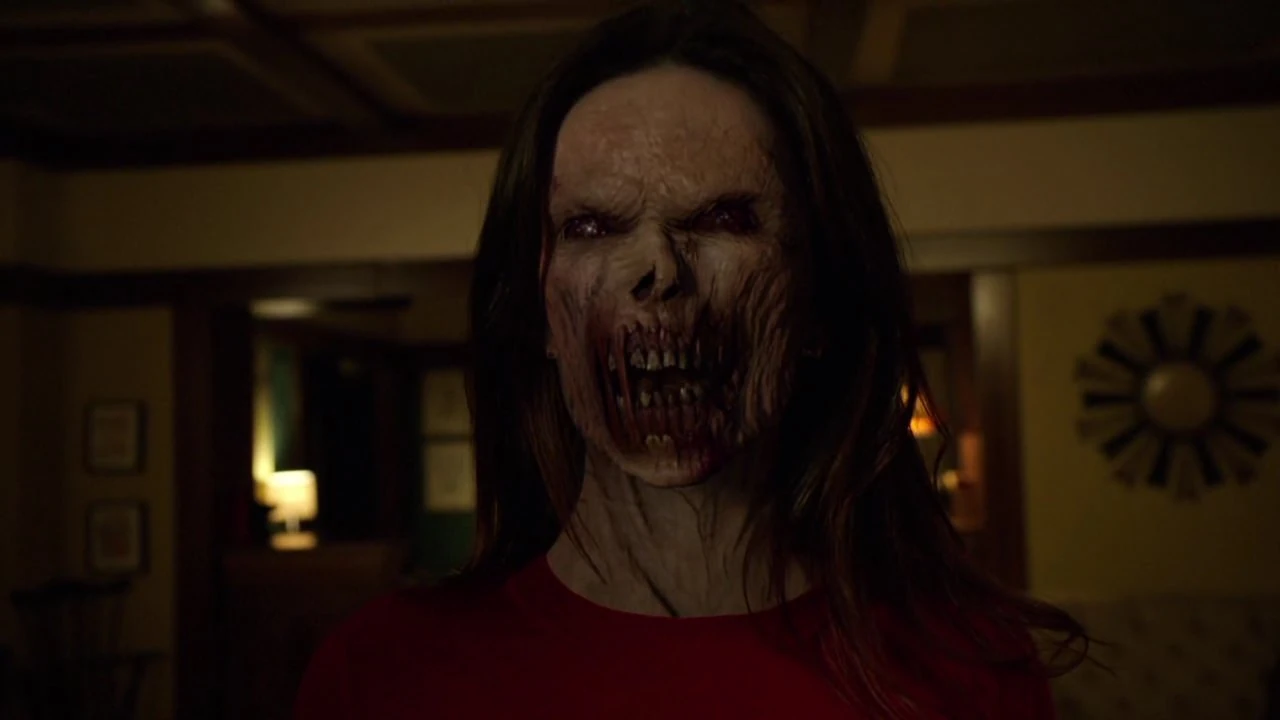
This is one part of the huge mess of what people have called "
Juliette only continued down this spiral of what it means to be Wesen and the balance of it throughout the rest of the season, it shifted from beating a dead
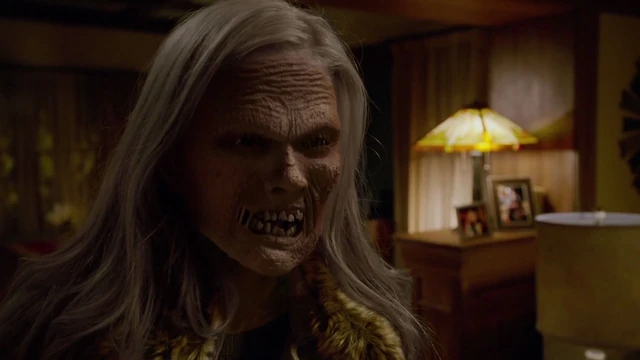
The issue I have ties Adalind into all of this from the moment Juliette tells Nick that she "will kill her." Since the start of the show, Grimm has kind of been a boy's club but with some sensitivity thanks to the guy love Monroe-style. Juliette was treated as something Nick struggled to keep separate from his Grimm and work life, someone who could see into the private places of himself, including the loss of Marie and the type of person he is having lost his parent(s) at an early age. Only through Adalind's continuing antagonism on Nick then Juliette, Juliette begins to hate her almost as much as Nick does.
But it's the relationship between Nick and Juliette that has always concerned me. Because she was always the home life that was to never get in the way of Nick's profession, Juliette was never even given any characterizing agency until she is turned into a Hexenbiest. Sure, before the transformation she had her moments of extreme passion defending her
Regardless, it's a woman internalizing a man and with Adalind destroying that man and by extension Juliette, it's understandable why the Burkhardt unit would collectively hate her. But it's the first glance of it that has always made me queasy and one of the oldest soap opera rules known to mankind. The blond-haired woman is the good girl and the antagonist is either a redhead or a brunette fighting over a man. Grimm somehow managed to invert that to their advantage. With all the emotional ammunition, yes, it's more than fair that Juliette on the Wesen flip side would be amplified for her
Where Juliette has become the antagonist, Adalind has fully settled into her role as the mother of (eventually) two children. I liked what they did to Adalind in the fourth season because of her stance as an antagonist and paying for it through the loss of her child. Whereas the last section of this post was about balance, it seems for the women their characterizing points are opposites. What was once the protagonist is now the antagonist and the antagonist's empathy would cure Juliette. What was once Adalind's biggest fear of having children and being a mother is now what she wants and realizing how ferocious she can be if she can't have them. After the scene she talked to her mother's grave in "You Don't Know Jack," however humorous, I got a sense that as someone of emotional abuse, it came full circle. There is something implied here that Adalind would struggle to be a good mother where Catherine just wasn't.
And here is where we are 4 years later. It's still a boys-club on some level (considering the uh-may-zing "army" scene, invading the Royal compound with all the guys and Trubel) with the women having more of a presence. Excluding Rosalee and Trubel, Juliette and Adalind wear their painfully archetypal attributes as two unfortunate extensions of Nick much like a
Dear Grimm Writers...
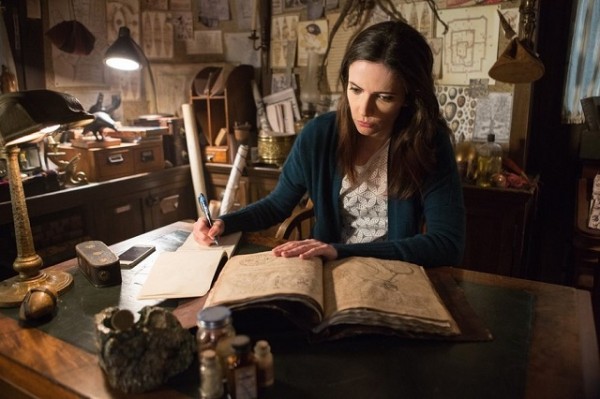
There is no nicer way to say this, but, you're getting sloppy. Other than the poor focus on Nick which would have been remedied by a PTSD like arc of reviving (super-) Grimm powers, there are a few other non-Nick-centric things I would like to discuss. But before I do, let me praise you first. I love how you brought Wu into all of this as well as the compound invasion which was probably the best thing I've seen this season next to the Wesenrein situation. I love the Mishupeshu (obviously), Monroe's speech at the camp after all that happened to him and the satisfying, although campy as hell Hexenbiest fight between Juliette and Adalind. I really enjoyed all the cases you brought to the table this season, but honestly, I can't make a favorite episodes blog post for a number of reasons!
As great as the cases have been, the B and the occasional C storylines could have been better, whether through just grabbing that red pencil and about five thousand read-throughs focusing on details alone. In "You Don't Know Jack," the sloppiness was the most apparent. Cops (both human and Grimm alike) who aren't versed in the legend of Jack the Ripper, really? If someone said something right away like a cop walking by the trio, "Gosh, this reminds me of Jack the Ripper" would have triggered something in their minds that the deceased room mate's life could have been next and to get her into protective custody! I really don't mind my worlds crossing being an avid "Ripper Street" fan, but another Jack element also bothered me just as much as the former. In "Double Date" Renard enlists Monrosalee to help find out what's wrong with him but they never follow through. How can you develop dimensional characters when you only have 40 minutes and known to be the pit stop hour where commercials come to die?

Another detail that really bothered me was when you decided to burn the trailer (which I understand for plot device reasons and even on an unconscious level, it does work but for the next week I actually thought of quitting you). From season 1, we are to believe of Nick's character that although very intuitive about people, he is also incredibly jaded from his family. First Aunt Marie dies, then he finds out his mother is alive, then the trailer burns up. Even if it was an extended scene, it would have been nice for Nick's reaction to literally be in tears as if he's losing Marie all over again. If we are to continue to play this back and forth of Nick's psychology between being Grimm and human then where was this emotional battle or are we so masked by the "Hexenbitch" arc we can't even have that moment?
I understand how badly the season wanted to physically pit Juliette against Adalind now having Hexenbiest powers, but as much as you made the rules of what constitutes a woge ,woge was a little needless. A person can only stay in anger or absolute fright for so long, you even wrote season 3's "The Show Must Go On" over this theory! I just felt that Juliette and Adalind's woges were really just a device to mask the stunt people which I find very poor direction. I'm sorry, I just do!

In the past two sections I have mentioned what deserves to be expanded on and when you need to use that red pencil. It's like what I said in the first post: "How can you develop [...] when you only have 40 minutes and known to be the pit stop hour where commercials come to die?" Well, for one, you can cut down a C storyline like how you did with Adalind in season 3, you just have to be strategic! Secondly, you need one of the creators there in the writer's room, making executive decisions based on details and consistency from season to season! Thirdly, I more than understand that you want to experiment and test the limits of Nick, he's the central character of the show, but if killing aspects of what made him or rather, the show so atmospheric at the expense of camp or the occasional preachiness , I think we have a problem. Oh, and let Brenna Kouf at the helm more often! "Double Date" was really disturbing in a realistic MPD kind of way and "Chupacabra" was definitely something out of season 1 which is a standard to live up to that you're, I'm sorry to say, forgetting about! Like the 7 keys situation or the resistance!
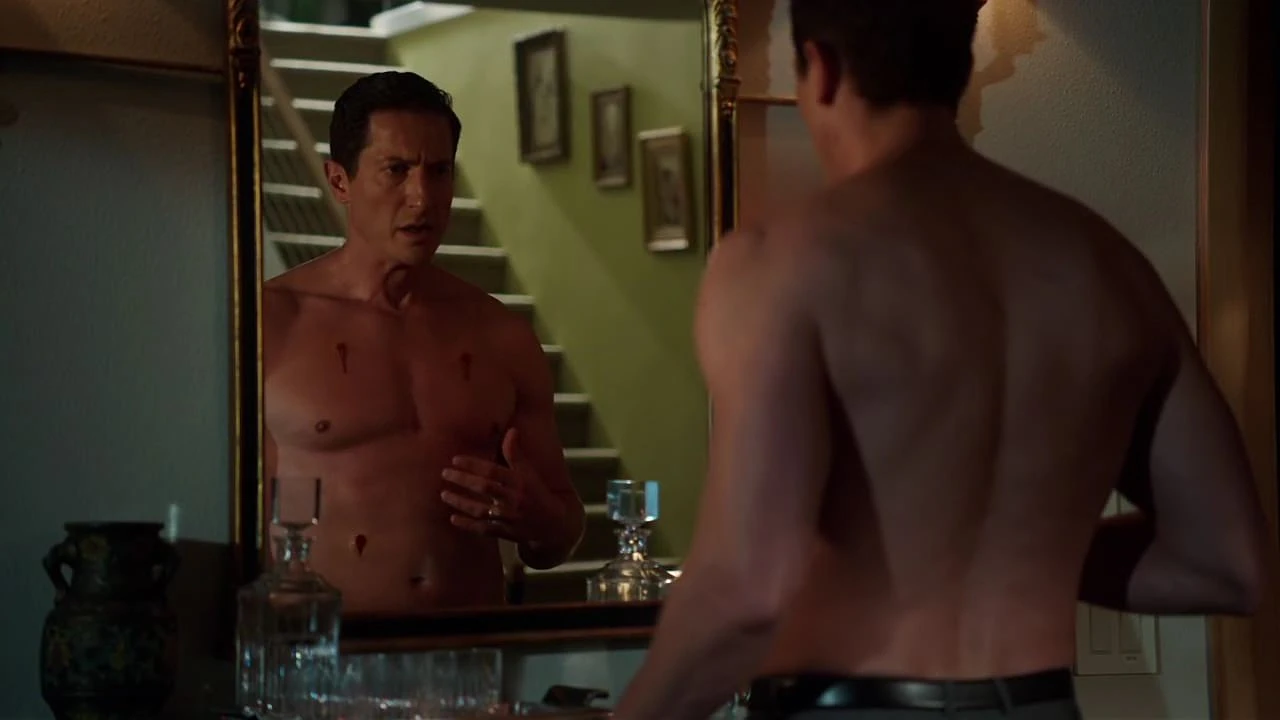
And that promised, although bullet-infested, shirtless rage. You're welcome!
.jpg)
The Story
 |
| W. Frank Brinton and wife, Indiana on the right |
The original avid film collector was an Iowan. Washington County native W. Frank Brinton was a known eccentric, inventor and more in likely the inventor of something like a traveling film festival. From 1895 until 1910 Brinton and wife, Indiana showcased short silent films across the Midwest and Texas. Taken from production companies such as Lumiere (including Georges Melies), Edison and many others, early film goers were treated to scenes from India or Egypt, pre-Chaplin comedies and for those weren't scared of clowns, a man dressing up as one.
After 70 years in Brinton's executor's basement, Iowa historian and archivist Mike Zahs made an impulse purchase with a box labelled "Brinton crap." Contained was sixteen tins the
Tonight, Tonight
 |
| Mike Zahs (so sorry about the |
Naturally, Zahs
.jpg)
All of these were to the tune of the Red Cedar Chamber Music, either adapted from popular music of the time or by the original orchestrator, Harvey Solberger. A guitar string broke and Mr.Zahs saved the moment by being a walking Brinton encyclopedia. There was a kazoo! A fight with a dummy pre-Tom Conway fighting with a stuffed cat in Cat People (1942)! Jump cuts between two men of the clergy giggling like little girls! A child, even giggled during the comedy shorts which is definitely a good sign for film history in the next 30 years. It was a magical night. (Including B shoving her face full of fried risotto corn balls at the reception, but that's a different story....)
(Thank you, IowaNow
Elephants (including the interactive moment with getting sprayedby water by the master of ceremonies....)
Camel Market
On the Farm (1902)
Iowa? (1901)
Sydney the Clown (1905)
Pullman Car (1900)
The Matrimonial Ceremony (1906)
At the Dentist (1907)
Mashing a Jersey Mosquito
The Good Story
All on Account of Eliza
All of these were to the tune of the Red Cedar Chamber Music, either adapted from popular music of the time or by the original orchestrator, Harvey Solberger. A guitar string broke and Mr.
"Saving Brinton"
The exclusive thing about tonight (besides the fried risotto corn balls...) was the reason why a film crew was lurking around Shambaugh Auditorium . Cofounder of the local art house theater FilmScene and Copartner of Northland Films, Andrew Sherburne along with Tommy Haines and John Richard are in the process of documenting Zahs and his awesome nerdiness about the Brinton silent films. To describe "Saving Brinton," Sherburne explains that "it is a film about film" where "the past is a constant presence."
Although clearly still filming, Sherburne and crew pulled together a 3 minute trailer that was full of that majestic beard on his movie tours much like the original Brinton ones. The icing on top of a huge movie nerd's cake was Zahs's room at his home that was devoted to all of these artifacts as well as his fantastic sense of humor and overall enthusiasm for this project. I expect a future screening at FilmScene !
   |
||
  |
||
|
|


.jpg)


